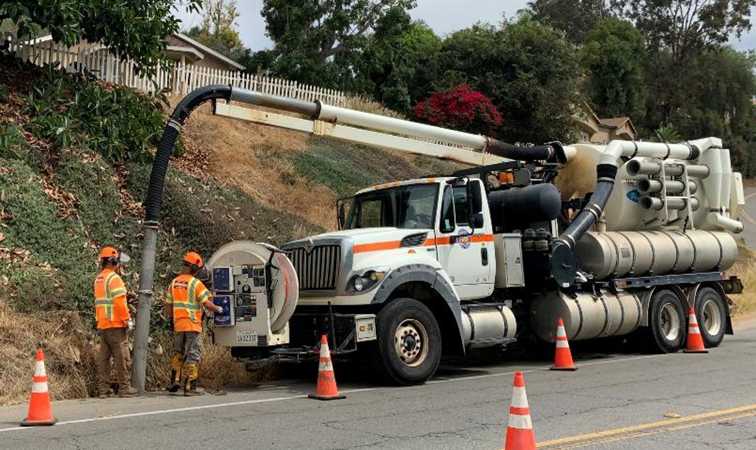
San Diego County officials laid out a detailed storm-response playbook Tuesday, Oct. 6, including the county's first-ever 24-hour operational plan for major storms expected during a potentially historic El Niño season.
The plan poses direct stakes for Encinitas, where coastal erosion, flooding in low-lying areas and mudslide risk rank among the county's listed threats. Presented to the Board of Supervisors, the plan covers phased protocols before, during and in the first 24 hours after a storm hits. It follows the county's recent emergency proclamation, which streamlined emergency contracting and resource access.
New roles, new protocols
The updated Emergency Operations Plan creates two positions that did not exist before: an Early Recovery Coordinator and a Community Liaison Officer. The county has also trained more than 1,200 Disaster Service Workers with dedicated emergency roles and annual refresher training to support multi-day operations.
Kathleen Flannery, interim general manager of the county's Public Safety Group, told the board the county had created clearer operation rules and expanded evacuation procedures, as CBS 8 reported.
"Emergencies don't end when the rain stops," Flannery said.
What the 24-hour plan looks like
Before a storm, county meteorologists and the Office of Emergency Services (OES) monitor forecasts and hold daily coordination calls with public-safety agencies. First responders, public works crews and water-rescue units are prepositioned based on threat information.
During a storm, the San Diego County Sheriff's Office uses hi-lo sirens, helicopter announcements and patrol-car loudspeakers when areas face immediate danger. Case managers begin assessments at shelters, offering food, medical care, mental-health support and access to charging stations.
Within the first 24 hours after a storm, recovery managers conduct rapid damage assessments. San Diego County Public Works inspects roads, bridges and culverts in unincorporated areas to evaluate structural safety. The department maintains nearly 2,000 miles of county roads and operates 13 maintenance stations providing around-the-clock storm response.
Reaching residents without internet
County staff said community feedback after the January 2024 storms drove major changes. Partners including CERT volunteers, nonprofits and Tribal Nations emphasized the need for clearer communication, expanded multilingual outreach and more nondigital information options.
The county is now expanding outreach through door-to-door visits, libraries, senior centers and food-distribution events. Community Health Workers are sharing multilingual preparedness materials throughout neighborhoods. The county coordinates with the Metropolitan Transit System (MTS) and North County Transit District (NCTD) to provide transportation during evacuations.
Supervisor Monica Montgomery Steppe, the board's vice chair, said residents at community meetings after the January 2024 flooding were angry about a lack of coordinated response. She said the county had committed to doing better.
How Encinitas residents can prepare
The county launched the El Niño 2026 Information Hub at AlertSanDiego.org, giving residents one place to find preparedness tools, sandbag locations and emergency alerts. Nearly 40 county and Cal Fire stations offer free sand and sandbags. Encinitas-area residents in ZIP codes 92024 and 92007 can search for nearby sandbag locations through 211 San Diego.
Ashley Gain, a program manager for community engagement at the county's OES, told the San Diego Union-Tribune on Oct. 2 that six inches of rainwater can move a person and 12 inches can move a small car.
Residents can register for emergency alerts at AlertSanDiego.org, review evacuation routes and call 877-684-8000 for storm-related road issues.